
A practical guide to National Pet Poison Prevention Month — and why March is the right time to pay attention.
Spring has a particular magic to it. The windows come open. The garage gets reorganized. The cleaning supplies come out in force. Walks get longer, guests start dropping by, and everything feels freshly possible.
It also quietly, without fanfare, creates more opportunities for your pet to ingest something dangerous than almost any other time of year.
March is National Pet Poison Prevention Month, and the timing is not accidental. Spring doesn’t introduce new hazards so much as it multiplies existing ones: more products in use, more doors left open, more surfaces temporarily occupied by things that normally live in cabinets. Your dog doesn’t distinguish between “spring cleaning product” and “interesting new scent on the floor.” Your cat doesn’t know that the mulch you just spread in the garden can cause neurological symptoms.
This isn’t a reason for panic. It’s a reason to spend twenty minutes this month doing something your future self will thank you for.
Why Spring Specifically?
Most pet poisoning incidents don’t involve negligence. They involve transitions: moments when routines shift, things get moved, and the normal safeguards are temporarily absent. Spring is full of transitions.
Consider what a typical household looks like between March and May:
- Deep cleaning replaces spot cleaning, which means stronger products used more frequently and left accessible longer.
- Garage doors stay open for hours at a stretch, providing access to fertilizers, weed killers, rodent bait, and automotive fluids.
- Yard work resumes, introducing new chemicals, mulch, compost, and in many regions, an explosion of wild mushrooms.
- Pets emerge from quieter winter routines more energized and curious than they’ve been in months.
- Guests arrive more frequently, bringing food, bags, and substances your pet has never encountered before.
Any one of these changes is manageable. Together, they create what veterinary toxicologists refer to as an “increased exposure window”: more chances, in more places, across more hours of the day. The variables compound. The risk isn’t dramatic, it’s statistical.
The good news is that most of it is preventable with a handful of deliberate habits.
The Five Danger Zones in a Spring Home
- The Cleaning Caddy
Spring cleaning products are often the most potent cleaners you own. They’re also the ones most likely to be left out on the floor while you move furniture, in a bucket while you mop, or on a low shelf “just for a minute.”
Pets encounter cleaning products in ways that aren’t always obvious: stepping in mopped residue and grooming their paws later, licking a floor that was recently wiped with a disinfectant, chewing a container because it smells interesting. Symptoms of chemical ingestion can be delayed by hours, which means an owner who didn’t notice the exposure may not connect the symptoms when they appear.
The fix: Designate one high, closed storage location for all active cleaning supplies during spring cleaning season. Not under the sink. Think behind a door, above pet height, and closed every single time.
One thing worth noting: “natural” and “pet-safe” labels are not regulated the way pharmaceutical claims are. Some essential oils, especially eucalyptus, tea tree, and peppermint, are among the more common causes of feline toxicity. Plant-based cleaners can still cause harm. Treat any cleaning product as a potential hazard regardless of how it’s marketed.
- The Garage and Mudroom
This is the highest-risk room in most homes during spring, as it functions as a “temporary storage” zone – which is precisely the problem. In a typical spring garage you’ll find fertilizers, weed killers, rodenticides, ice melt residue, pesticides, and automotive fluids, often in various states of open or unsecured.
Antifreeze deserves special mention. It tastes and smells sweet to animals, making voluntary ingestion unusually common. Even a small amount can cause fatal kidney failure in dogs. The lethal dose for cats is smaller still. If you have any in the garage, it needs to be in a sealed container stored out of reach.
Rodenticides carry a secondary risk many owners don’t anticipate. If a rodent has consumed bait and your dog eats the rodent, toxicity can transfer. This is called relay toxicosis, and it’s more common than it sounds.
Simple habits: Wipe paws before re-entering the house after any yard time. Keep the garage door closed when you’re not actively working in it. If the garage is genuinely inaccessible, wonderful. If not, it should be on your list.
- The Counter and Coffee Table
Spring gatherings mean more food in more places for more hours. Chocolate, xylitol, grapes, raisins, macadamia nuts, and alcohol are all common spring table hazards and guests who aren’t thinking about pet safety may leave things out without a second thought.
Xylitol deserves particular attention because its use has expanded significantly in recent years. It now appears in some peanut butters, certain vitamins, various packaged goods, and a range of sugar-free products that aren’t obviously candy. Even small amounts can cause life-threatening hypoglycemia in dogs within thirty minutes of ingestion.
The most commonly overlooked moment: after the gathering, not during it. Leftovers in bags on low surfaces, wrappers on the floor, plates left on the coffee table before bed. Build a post-gathering sweep into your routine before you turn in for the night.
- The Yard
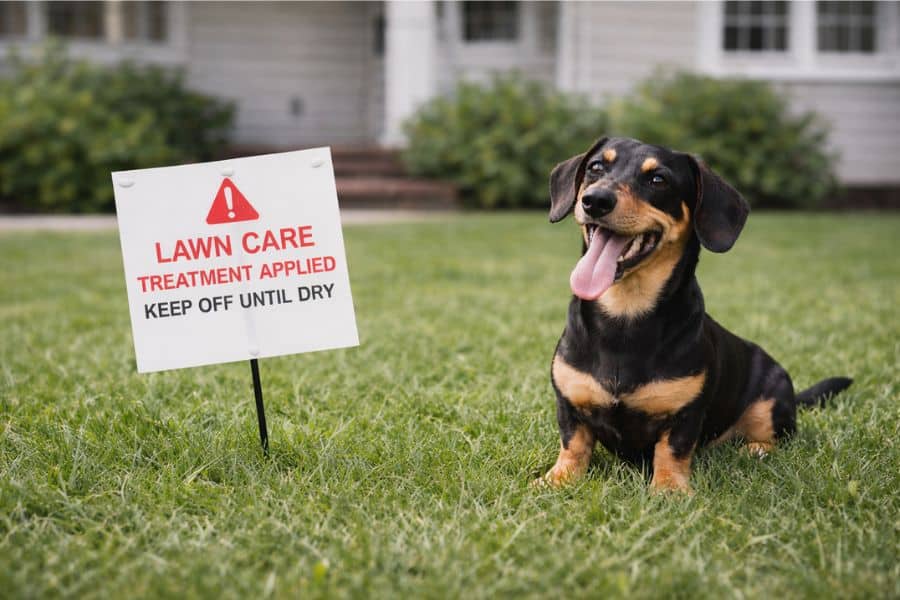
Even a yard you don’t treat yourself can carry risk. Neighbors apply herbicides, pesticides, and fertilizers. These compounds remain active on grass for 24 to 72 hours after application. Pets pick them up on paws and fur, then ingest them during grooming. If a lawn looks freshly treated or has a chemical smell, give it 48 hours before letting your pet onto it.
Mushrooms: Spring brings a surge of wild mushroom growth in most regions. The majority are non-toxic, but identification is genuinely difficult, even for trained mycologists, and some toxic species are visually indistinguishable from benign ones without laboratory analysis. If your dog shows interest in a mushroom, remove it.
Compost piles are a frequently underestimated hazard. Decomposing organic matter produces mycotoxins, compounds that cause tremors, hyperthermia, and seizures in dogs. A compost pile should always be fully enclosed or completely inaccessible to pets.
- The ‘I’ll Put It Away Later’ Moment
This is less a physical location than a mental state, and it accounts for more toxin exposures than any specific product category. The in-between moments: reorganizing the garage, packing for a trip, hosting guests, dealing with a delivery are often problematic. Something gets set down temporarily. The pet investigates. The outcome is preventable.
Treat “I’ll deal with it in a minute” the same way you’d treat leaving something dangerous near a toddler. The intention is irrelevant. The access is what matters.
The 15-Minute Spring Safety Reset
If you do only one thing this month, do this. It takes fifteen minutes and it’s more effective than any amount of general awareness.
- Choose one zone, the garage, kitchen, or yard, and start there.
- Walk through it at your pet’s eye level. This perspective shift is genuinely revealing.
- Move everything chewable, lickable, or spillable above pet height or behind a closed door.
- Save the ASPCA Animal Poison Control Center number in your phone right now: (888) 426-4435.
- Save Pet Poison Helpline as a backup: (855) 764-7661.
- Know where your nearest 24-hour emergency veterinary clinic is before you need it.
- Walk every adult in the household through the new rules.
That’s it. Fifteen minutes now can spare you thousands of dollars and an enormous amount of distress later. Neither of those is an exaggeration.
If Something Goes Wrong Anyway
Even careful households have incidents. The outcome often depends less on what was ingested and more on how quickly the owner recognized the situation and acted.
Symptoms That Should Never Be Waited Out
Contact your veterinarian or an emergency clinic immediately if your pet shows any of the following:
- Sudden or repeated vomiting, especially if you’ve found chewed packaging.
- Excessive drooling or foaming at the mouth.
- Lethargy that’s out of character – not tired, but difficult to rouse.
- Muscle tremors or any seizure activity.
- Disorientation, stumbling, or an unusual gait.
- Pale or white gums. This warrants immediate emergency care!
- Difficulty breathing.
Do not wait to see if symptoms resolve. Many toxins cause internal damage before visible signs appear. Early treatment, sometimes as simple as induced vomiting before absorption occurs, can be the difference between a brief clinic visit and an extended hospitalization.
One Critical Caution
Do not induce vomiting unless explicitly instructed to do so by a poison control specialist or your veterinarian. For caustic chemicals, petroleum products, and certain medications, vomiting causes additional damage on the way back up. Let the professionals make that call.
| 📋 WHAT TO HAVE READY WHEN YOU CALL
• Your pet’s species, breed, approximate weight, and age • What they ingested: product name, active ingredients, or description • Your best estimate of how much • When the exposure likely occurred • Any symptoms present Bring the packaging to the clinic if you can. Photograph the label first so that information travels with you. |
Prevention Without Paranoia
Spring is one of the best seasons to be a pet. Animals are energized, curious, and fully alive to the change in the air. The goal of everything above is not to introduce anxiety about your own home. It’s to make a few adjustments so that curiosity can stay safe.
Make accidents harder to happen.
If you have questions about any of this, or want to talk through your specific home setup, reach out. This is part of what we do — and we’re always happy to help.


Recent Comments