
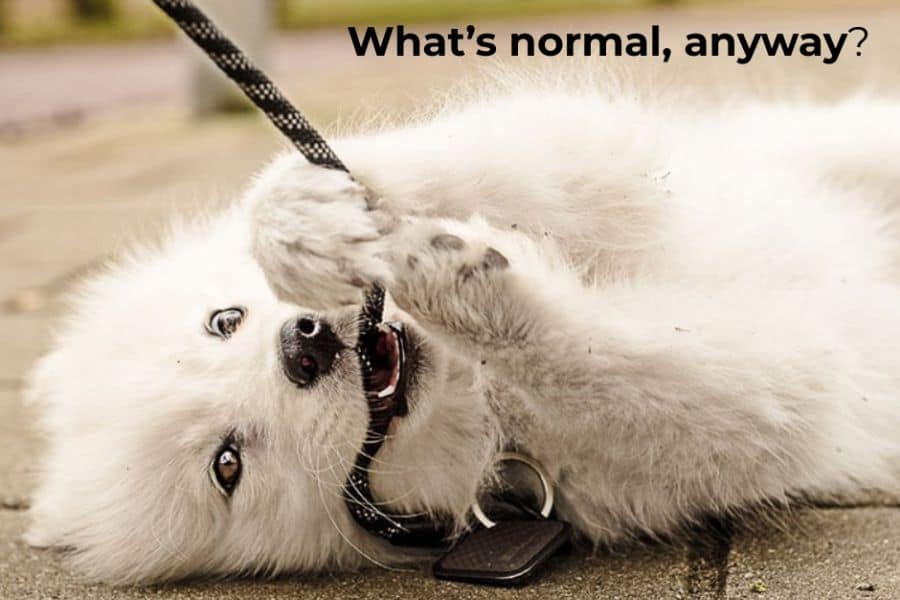
At some point, almost every dog owner asks this question – usually while watching their dog do something baffling: refuse a perfectly good walk, bark at the trash can like it has questionable intentions panic over a ceiling fan that has existed for years, or prefer sleeping in the bathtub.
You look at other dogs, dogs who are confident, social, unfazed and wonder if yours missed a meeting.
Here’s the truth that’s both comforting and inconvenient: there is no such thing as a normal dog.
There are common behaviors, sure. But dogs, like people, arrive in the world with their own wiring. Temperament, early experiences, genetics, health, and environment all intersect to create the individual animal standing in your kitchen staring at the wall like it owes him money.
Dogs Are Not Blank Slates
Some dogs are born bold. Others arrive cautious. Some are curious about everything; others would prefer a smaller, quieter world with fewer surprises and better snacks.
A dog who startles easily isn’t broken. A dog who doesn’t enjoy dog parks isn’t antisocial. A dog who needs extra reassurance isn’t manipulative.
They’re responding to the world as they experience it.
And often, they’re doing exactly what makes sense to them.
“Normal” Is Usually Code for “Convenient”
When people say they want a “normal dog,” what they usually mean is a dog who fits easily into human expectations. They mean a dog who walks politely, greets strangers calmly, is comfortable being alone, doesn’t bark, bolt, or worry too much about anything.
Those dogs exist. They are wonderful. They are also not the standard by which all dogs should be measured.
Some dogs need more structure. Some need more reassurance. Some need slower introductions and smaller circles. Some need us to adjust, rather than expect them to.
That isn’t failure. That’s relationship.
Behavior Is Communication, Not Defiance
Dogs don’t act out for drama. They act out because something feels confusing, overwhelming, uncomfortable, or unsafe.
A dog who pulls away from the leash isn’t stubborn. A dog who hides when guests arrive isn’t rude. A dog who freezes, barks, or refuses isn’t “bad.”
They’re telling you something. And listening – really listening – is where good care begins.
Comparison Is the Fastest Way to Miss the Point
Social media is full of dogs who hike mountains, nap peacefully in cafés, and pose for holiday cards without blinking. That can quietly convince us that our own dogs are somehow falling short.
But your dog’s job isn’t to be impressive. It’s to feel safe…to trust you…to live well in the body and brain they were given.
Some dogs bloom in busy lives. Others thrive in calm routines. Some need patience measured in months, not days.
Meeting them where they are is not lowering the bar. It’s choosing compassion over comparison.
The Question Worth Asking Instead
Instead of asking, “Why doesn’t my dog act like a normal dog?”
Try asking:
- What makes my dog feel safe?
- What situations are hardest for them?
- What routines help them relax?
- What are they telling me with this behavior?
The answers are usually there, if we slow down enough to see them.
And when we do, something interesting happens. The dog who once felt “difficult” starts to feel familiar. The behaviors begin to make sense. The relationship deepens.
Your dog may never act like someone else’s idea of normal.
But when they’re understood, supported, and allowed to be who they are, they become something far better:
Your dog.
Recent Comments